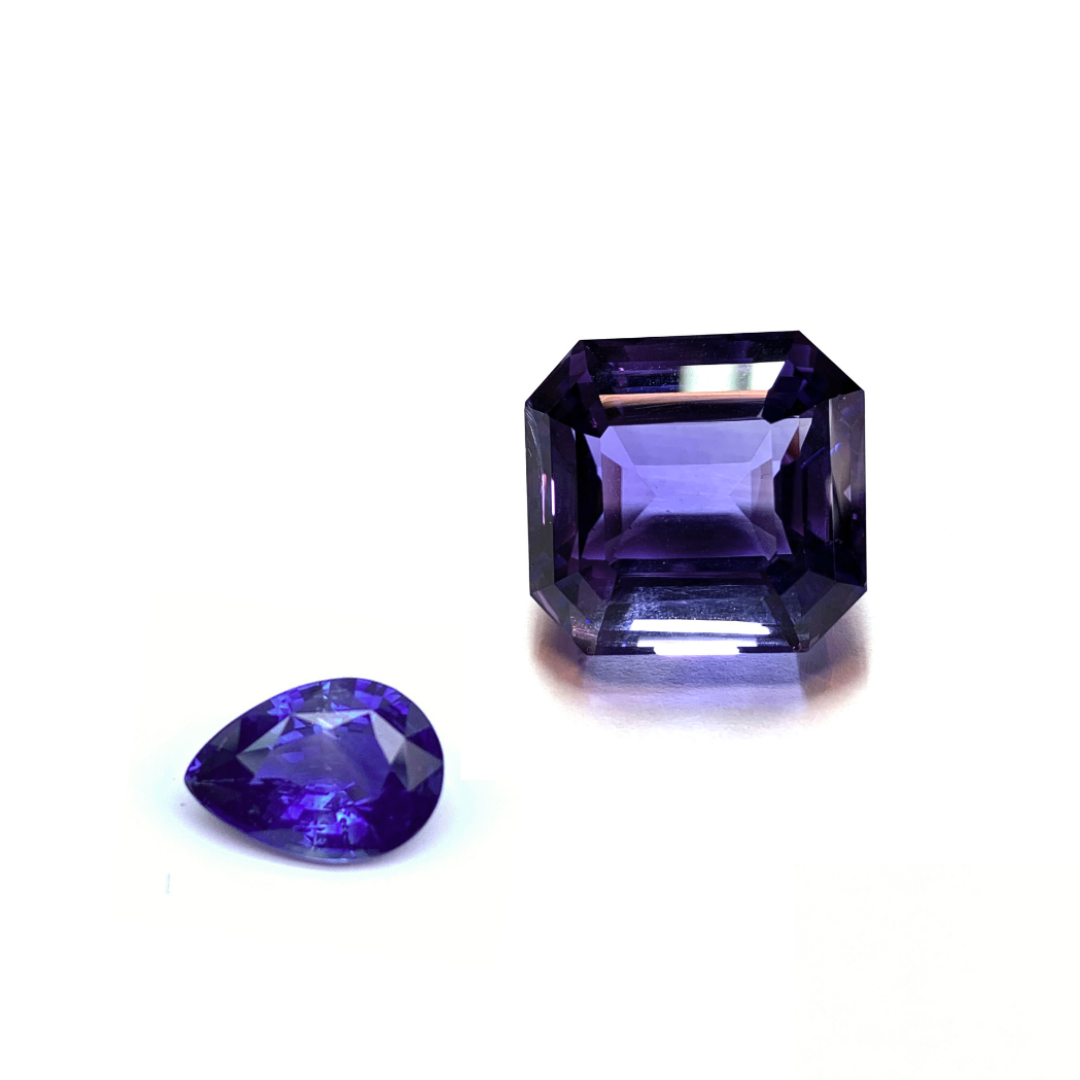
Amethyst: everything you need to know about this purple stone: quality, care, and origins
February birthstone, amethyst is a variety of purple quartz that has fascinated humanity for millennia. Its shades, ranging from delicate lilac to deep purple, offer great visual richness and allow for a wide variety of sizes and shapes. Natural or lab-created, amethyst captivates with its beauty and versatility.
Appreciated since antiquity, amethyst is featured in the jewelry collections of royal families in Europe and Asia, symbolizing elegance and refinement. Now widely available, amethyst remains a prized stone for the richness of its color.
Beyond its aesthetics, amethyst is an ideal stone for everyday wear. With a hardness of 7 on the Mohs scale, it stands out for its resistance to common shocks and scratches. Its silica-based composition gives it remarkable strength, superior to many everyday materials, such as glass or steel.
Robust and durable, amethyst fits perfectly with all styles of jewelry and can be worn with complete peace of mind, both daily and on special occasions.
What factors determine the quality of an amethyst?
The quality of an amethyst is based on several essential criteria that influence its appearance, value, and brilliance. The main factors to consider are the color of the amethyst, the size, the clarity of the stone, and its carat weight.
Color of the amethyst (Color)
Color is the most important criterion for assessing the quality of an amethyst. The most sought-after stones exhibit an intense purple hue with reddish reflections, homogeneous and well-distributed. Shades ranging from saturated purple to dark purple are particularly appreciated, provided the stone retains good brightness. An amethyst that is too dark may lose its brilliance and appear almost black in low light.
Size of the amethyst (Cut)
The cut of the amethyst plays a major role in enhancing its color and brilliance. A well-executed cut allows for better light reflection and reveals the
depth of the stone. Amethyst can be cut into many shapes, such as oval, cushion, heart, or round, making it very popular in jewelry.
Clarity of the amethyst (Purity)
The clarity of the amethyst is an important criterion in assessing its quality. The majority of cut amethysts available on the market are considered eye-clean, meaning they do not have visible inclusions without magnification.
Weight of the amethyst (Carat)
The carat weight is another advantage of amethyst. This semi-precious stone is often available in large sizes, allowing for the acquisition of a quality amethyst with a high carat weight without the price increasing disproportionately, unlike stones such as diamonds.
Where is amethyst found?
Amethyst is mined in several regions of the world. Until the 19th century, Russia was its main source, before the discovery of significant deposits in Brazil made this stone much more abundant.
Today, the main deposits of amethyst are located in Africa and South America. Brazil, particularly the state of Rio Grande do Sul, remains one of the largest global producers. Bolivia, with the Anahí mine, is known for its amethysts and for ametrine, a bicolored stone combining amethyst and citrine.
In Africa, Zambia is a major player, renowned for its intensely colored amethysts. Amethyst can also be found in the United States, in Arizona, where the Four Peaks mine produces stones with dark purple to reddish-purple hues.
How to care for and clean an amethyst?
Amethyst is an easy-to-maintain stone that requires only a few simple steps to keep its shine. Regular cleaning helps prevent the buildup of cosmetic residues and impurities that can dull the stone.
Steps to clean amethyst:
● Fill a bowl with lukewarm water and add a few drops of mild soap or unscented dish liquid.
● Soak the jewelry for a few minutes.
● Gently clean the stone and setting with a soft brush.
● Rinse thoroughly with clear water.
● Dry the stone with a soft cloth or microfiber towel.
Although durable, amethyst should be protected from heat, abrasion, and aggressive cleaning methods. It is recommended to avoid mechanical cleaners, such as ultrasonic devices, and to perform cleaning over a container to prevent any drops or losses.
Monthly maintenance is usually sufficient to preserve the beauty and brilliance of amethyst.
Want to wear amethyst daily? Discover our collection of jewelry and gemstones at Gemwheel, or transform your stone into a unique piece of jewelry with our custom design and redesign service.